
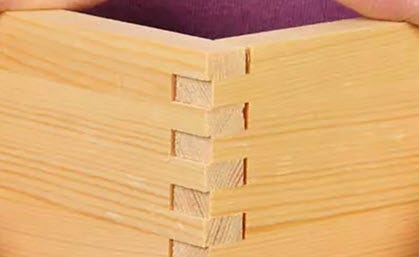
Nothing beats the clean, professional look of precisely cut box joints in your woodworking projects. When you learn how to make a box joint with router instead of a table saw, you’ll achieve tighter tolerances and cleaner edges that elevate your drawers, boxes, and cabinetry from amateur to professional quality. This guide walks you through building a simple jig and cutting flawless joints on your first try—no expensive commercial jig required. By following these router-specific techniques, you’ll create interlocking corners that look beautiful and last decades.
The secret to perfect box joints lies in router setup precision. Unlike table saw methods that struggle with tear-out and inconsistent cuts, a properly configured router delivers cleaner edges and more reliable results, especially in hardwoods. You’ll discover how to build an accurate jig from common materials, calibrate your router for perfect finger fit, and avoid the most common mistakes that frustrate beginners. Whether you’re making jewelry boxes or kitchen drawers, mastering this technique will transform your woodworking results.
Build Your Router Box Joint Jig Properly
:max_bytes(150000):strip_icc()/BJJ20Step201-de797a5b09514eababf28c82d24348bb.jpg)
A well-constructed jig is the foundation of perfect box joints. This simple design mounts securely to your router table and adjusts for different stock thicknesses with remarkable precision.
Jig Base Construction Essentials
Cut a 12″ x 18″ base from 3/4″ MDF to provide stability during cutting. Route a 3/8″ x 1″ slot centered 4″ from the front edge to accommodate your router bit clearance. Drill mounting holes matching your router table’s T-track spacing, typically 3/4″ on center. Add a 1/4″ x 3/4″ hardwood strip along the back edge as a fence support to prevent flexing during operation. This base design ensures your jig remains rock-solid throughout the cutting process.
Create a Precision Fence System
Your fence assembly needs two components: a fixed back fence (2″ x 18″ x 3/4″ MDF) mounted perpendicular to the base, and a sliding front fence (3″ x 12″ x 3/4″ MDF) that rides in T-tracks. Install a 1/4″ threaded rod mechanism for micro-adjustments, allowing movement in 0.001″ increments. This precision adjustment capability is crucial when dialing in perfect joint fit—something commercial jigs often lack without expensive add-ons. Ensure all fence components maintain absolute rigidity while allowing smooth movement.
Install Accurate Indexing Pins
Create indexing pins from 1/4″ steel dowel pins sized exactly to your router bit diameter. The primary pin mounts in the sliding fence, positioned precisely one bit diameter from the bit centerline. Verify pins extend 1/2″ above the fence surface and remain perpendicular within 0.005″ using a precision square. These pins determine your finger spacing, so accuracy here directly affects joint quality. For added versatility, consider installing multiple pins to handle different bit sizes without rebuilding your jig.
Calibrate Your Router for Perfect Box Joints
Spending 15 minutes on precise calibration saves hours of frustration later. These steps ensure your first cuts produce joints that fit perfectly.
Set Exact Bit Height for Your Stock
Adjust the router bit height to match your workpiece thickness exactly—no guessing. For 3/4″ stock, the bit should protrude precisely 3/4″ above the router table surface. Use test cuts in scrap wood identical to your project material and verify with digital calipers. Check height consistency across the bit’s cutting circle using a dial indicator; even slight variations cause uneven finger depths. Remember that bit height directly affects joint tightness—being off by just 0.005″ creates noticeable gaps.
Position Fence for Perfect Alignment
Position the fence so the bit’s cutting edge aligns with your jig’s indexing pin. Measure from pin center to bit edge—the distance must equal the bit radius. Lock the fence securely and verify no movement occurs during operation by tapping it with a mallet. Any fence movement during cutting creates inconsistent finger widths that ruin joint integrity. For critical projects, add a secondary locking mechanism to prevent accidental adjustments.
Run Critical Test Cuts First
Cut test joints in scrap wood matching your project material before touching final pieces. Adjust bit height or fence position in 1/64″ increments until achieving a snug fit requiring light tapping for assembly. Document final settings for replication—many woodworkers photograph their jig with calipers showing exact measurements. This test phase typically takes 10-15 minutes but prevents wasted project material and frustration. Never skip this step when learning how to make a box joint with router.
Cut Flawless Box Joints with This System

Follow this systematic approach for perfect results every time you make a box joint with router.
Prepare Boards for Perfect Alignment
Mark the “inside” faces of each board and label them “A” and “B” for tracking mating pairs. Ensure boards are flat, square, and consistent in thickness within 0.005″—any variation creates joint gaps. This preparation prevents assembly headaches later. For best results, cut all boards to final length before jointing to maintain consistent grain orientation across the project.
Cut Sequence for Board A
- Position Board A against the fence with the end flush against the indexing pin
- Make the first complete cut through the board thickness
- Move the board left, seating the new slot over the indexing pin
- Make the second cut, creating the first finger
- Continue across the entire board width, supporting the workpiece throughout
- For the final cut, use a push stick to prevent tear-out as the board exits the bit
Cut Sequence for Board B
- Position Board B with the edge offset by one finger width from the indexing pin
- This offset creates mating fingers that interlock with Board A
- Follow the same cutting sequence as Board A
- Verify complementary finger patterns before final assembly
- For tight joints, sand mating surfaces with 220-grit paper before assembly
Fix Box Joint Problems Immediately
Even experienced woodworkers encounter issues—know how to diagnose and correct them quickly.
Solve Loose-Fitting Joints
Cause: Bit diameter smaller than indexing pin spacing
Fix: Increase bit height by 0.005″ or move fence 0.005″ closer to bit
Prevention: Always verify pin diameter matches bit exactly using calipers before cutting project pieces
Eliminate Tight-Fitting Joints
Cause: Bit diameter larger than indexing pin spacing
Fix: Decrease bit height by 0.005″ or move fence away from bit in tiny increments
Tool: Use a dial indicator for precise fence movement—0.001″ adjustments make the difference between perfect and problematic joints
Prevent Tear-Out on Final Cuts
- Apply blue painter’s tape along cut lines to stabilize wood fibers
- Install a zero-clearance throat plate to support fibers during cutting
- Reduce feed rate by 50% when cutting end grain
- Use climb-cutting technique for final passes on figured woods
- Maintain consistent pressure throughout each cut—hesitation causes burning
Assemble Box Joints for Maximum Strength
Proper assembly techniques ensure your router-cut box joints last generations.
Prepare Joints Before Gluing
Sand all finger surfaces to 220-grit, focusing on inside corners where glue squeeze-out occurs. Test-fit joints dry, marking tight spots for additional sanding. Pre-finish inside surfaces before assembly when possible—this prevents having to sand glued joints later. For critical projects, use a small brush to apply glue to all mating surfaces rather than spreading with fingers for even coverage.
Apply Glue Correctly
Focus application on finger sides rather than bottoms to prevent hydraulic pressure buildup that can weaken the joint. Allow glue to become tacky (2-3 minutes) before assembly for maximum bond strength. Use parallel jaw clamps for even pressure distribution across the joint, applying pressure gradually while alternating between clamps. Maintain clamping pressure for 4-6 hours minimum—rushing this step compromises joint integrity.
Maintain Your Box Joint System
Keep your jig and equipment in top condition with regular maintenance.
Monthly Jig Care Routine
Clean the jig after each use, removing wood dust and resin. Apply paste wax to sliding surfaces monthly for smooth operation. Check all screws and mechanisms before each use—loose components cause inconsistent cuts. Replace worn indexing pins immediately; even slight wear creates noticeable joint gaps over time. Store your jig in a dry place to prevent MDF warping.
Router Bit Maintenance Protocol
Store bits in protective cases to prevent edge damage. Clean with resin remover after heavy use. Sharpen or replace when cut quality degrades—dull bits cause tear-out and inconsistent fingers. Monitor bit run-out with a dial indicator; replace bearings if run-out exceeds 0.003″. For best results, dedicate specific bits to box joint cutting rather than using them for general routing.
Perfect box joints require patience and precision, but the results justify the effort. Start with scrap wood to dial in your jig, then move to project pieces. Document your successful settings for future use—many woodworkers keep a dedicated notebook for jig configurations. With practice, you’ll cut joints that rival professional work—strong, beautiful connections that showcase your craftsmanship when you make a box joint with router. Remember that consistency matters more than speed; take your time with setup and calibration to achieve flawless results every time.